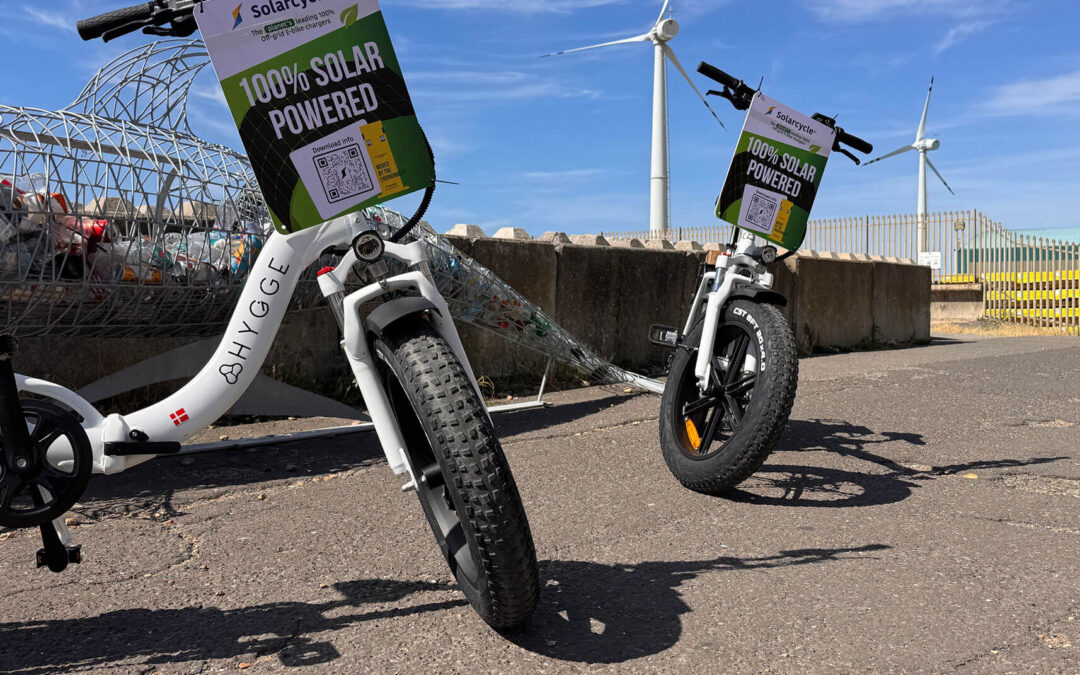
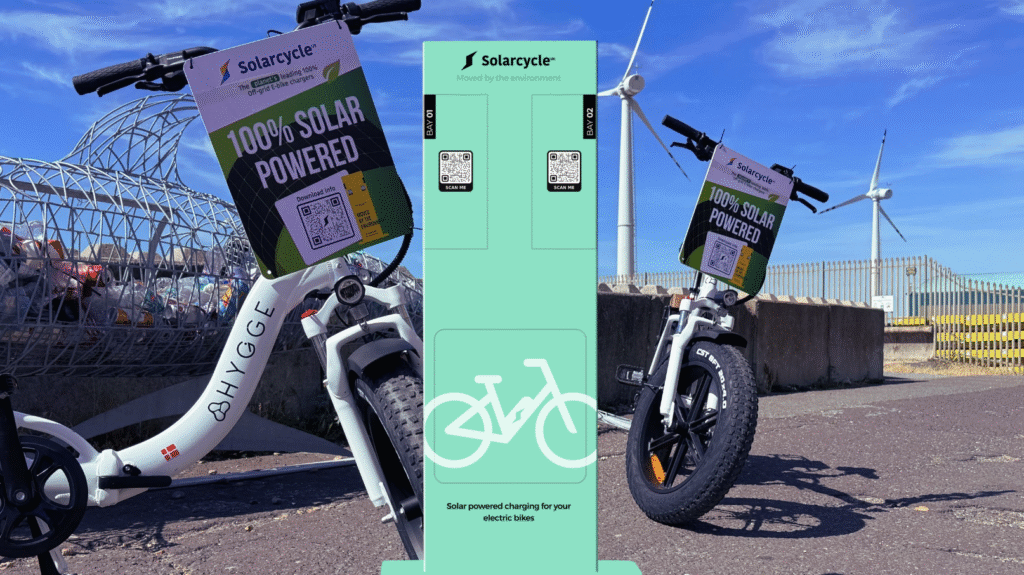
Case Study: Solarcycle UK Solar E-Bike Charger Installation on the Isle of Arran. Proving Solar Viability in Remote Scotland – Best-Performing UK Site Supports Eco-Tourism
The UK’s E-Bike Charging Network — Data Tells Us What‘s Next
We Built the UK’s E-Bike Charging Network
Now Data Tells Us What‘s Next…
What is next?
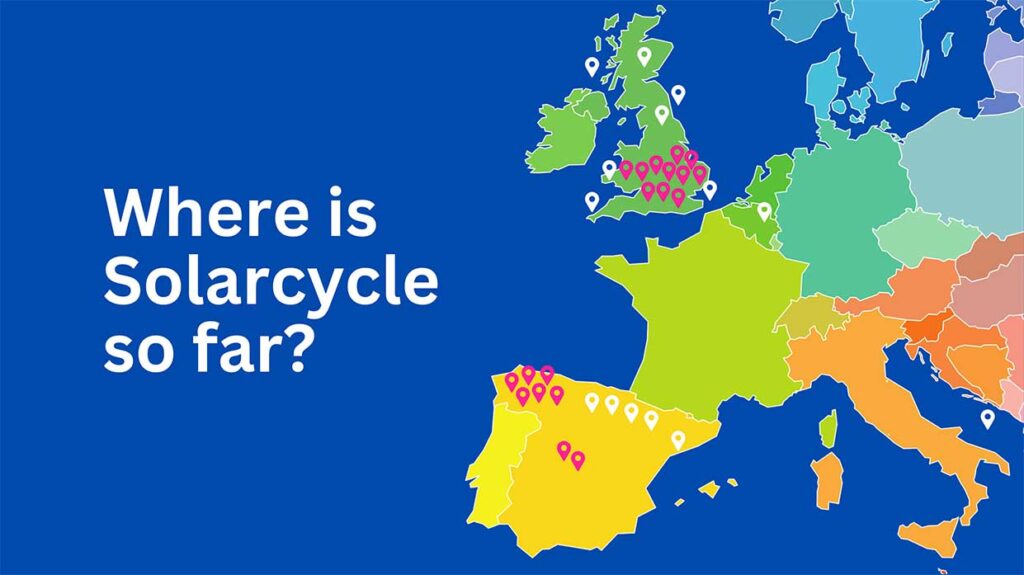
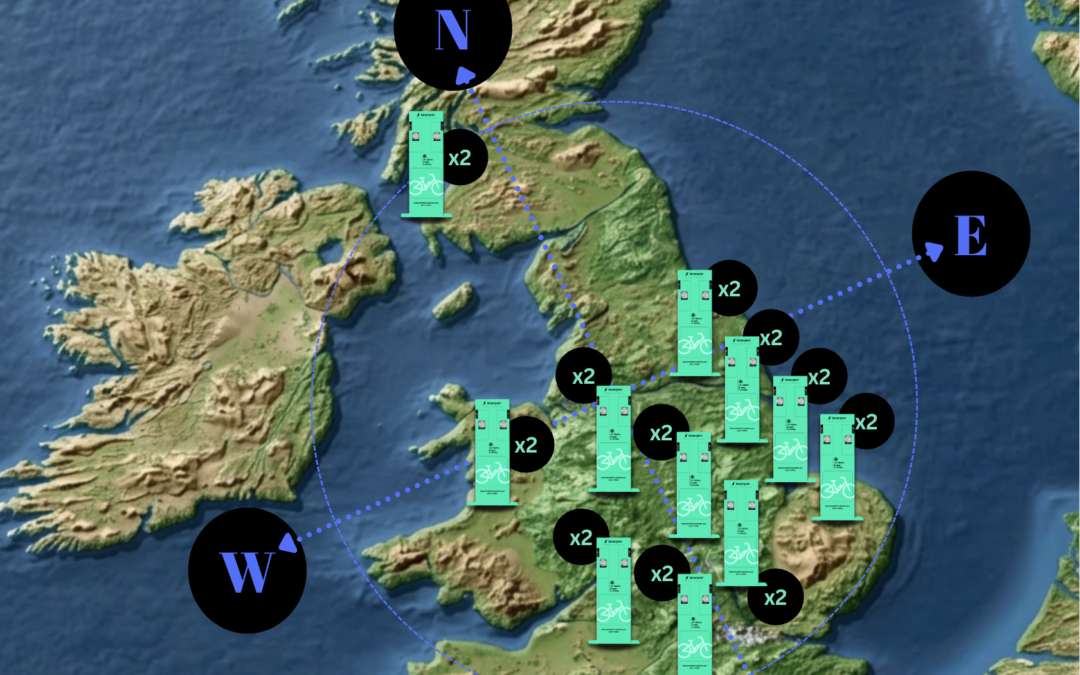
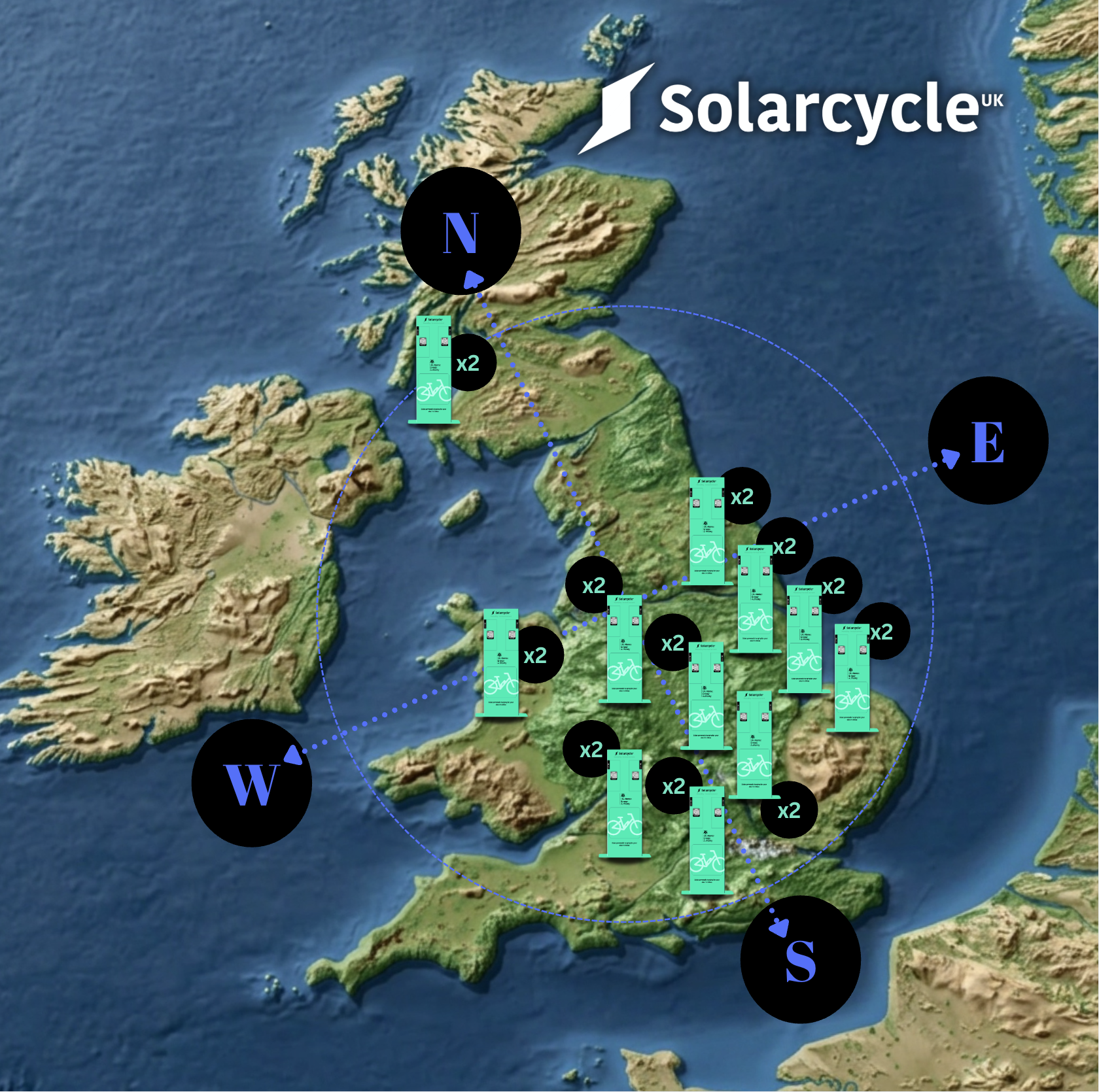
On a remote Scottish island accessible only by ferry, e-bike riders can now plug in to charge. 300 miles south, NHS hospital staff in Wales are able to top-up for free whilst on a shift at day or night. Even further south, customers at Surrey’s famous wine estate Denbie’s, can top-up their e-bikes before cycling out across the South Downs. And in Norfolk, a large campus now provides secure and safe e-bike charging. These moments are separated by geography, environment, and purpose — but they are all part of the same network. Solarcycle’s green energy network.
And together with chargers across the rest of the UK, we are building something no other operators in the UK can claim: a real, data-rich picture of how, when, and where people across this country are choosing to travel by e-bike.
We’re seeing E-bike adoption across the UK accelerating rapidly. But infrastructure is what converts interest into habit. And no other e-bike charging operator has installations across the range of environments that Solarcycle does — which means no one else is building the picture of UK charging behaviour that we are.
⚡ Live Performance Summary
Total E-bike kWh's Generated
calculating…
Total E-bike Miles
calculating…
Potential CO₂ Erased from Roads
calculating…
At Solarcycle UK, the answer has always been clear: charging infrastructure must be safe, accessible, and visible, enabling people to charge their e-bikes confidently wherever they visit, work, study, and travel. But the mission has grown beyond infrastructure. It is about generating the unique, nationwide insight that only comes from being present everywhere — and using that insight to shape what comes next.
That means not only serving cities and transport hubs, but also rural communities, remote destinations, educational and work campuses, healthcare facilities, and tourism locations spanning the full length and breadth of the UK.
Charging Infrastructure Beyond the City
One of the biggest misconceptions around sustainable transport is that innovation happens only in urban environments. It’s only partly true.
In reality, some of Solarcycle UK’s most impactful e-bike charging projects are taking place in communities where transport alternatives are limited, car dependency remains high, and sustainability goals are closely linked to local economic development. Solarcycle UK has proven — across a growing body of diverse locations — that accessible charging infrastructure drives meaningful behavioural change across both urban and rural communities.
That diversity is not accidental. It is the result of a deliberate strategy to build a network that mirrors the reality of how people actually move around the UK — not just how planners imagine they do.
From the Isle of Arran in Scotland to healthcare facilities in Wales, and countryside estates across southern England to work campuses in East Anglia — Solarcycle is present where others are not — this is due to its modular ‘off-grid’ design, SMART connected features and ability to be retrofitted to existing infrastructure. This is not merely a question of convenience. It reflects a national infrastructure shift that connects wellbeing, active travel, tourism, and the environment within a single, coherent vision. And critically, it generates a body of unique compelling data we can share with new customers.

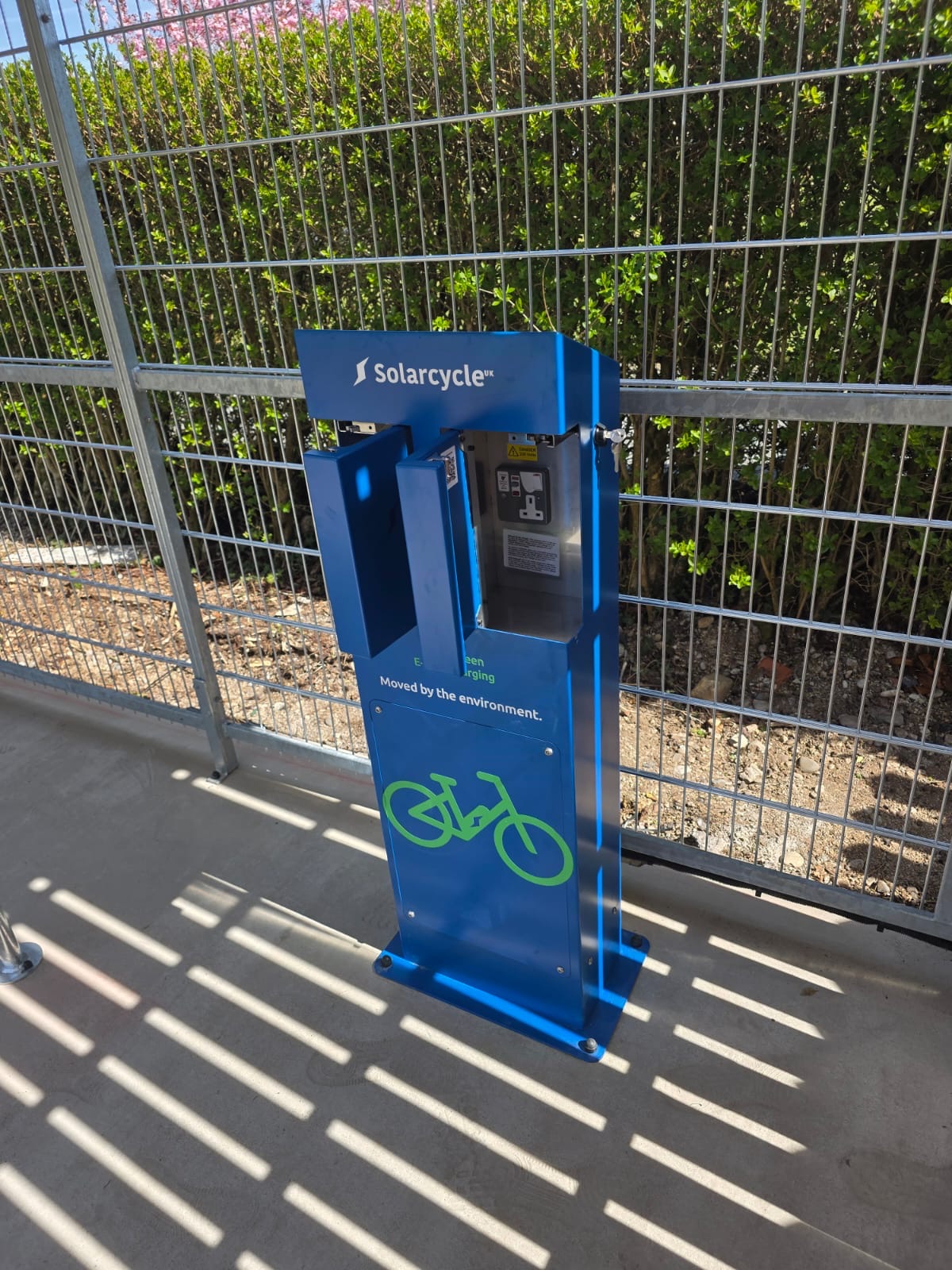

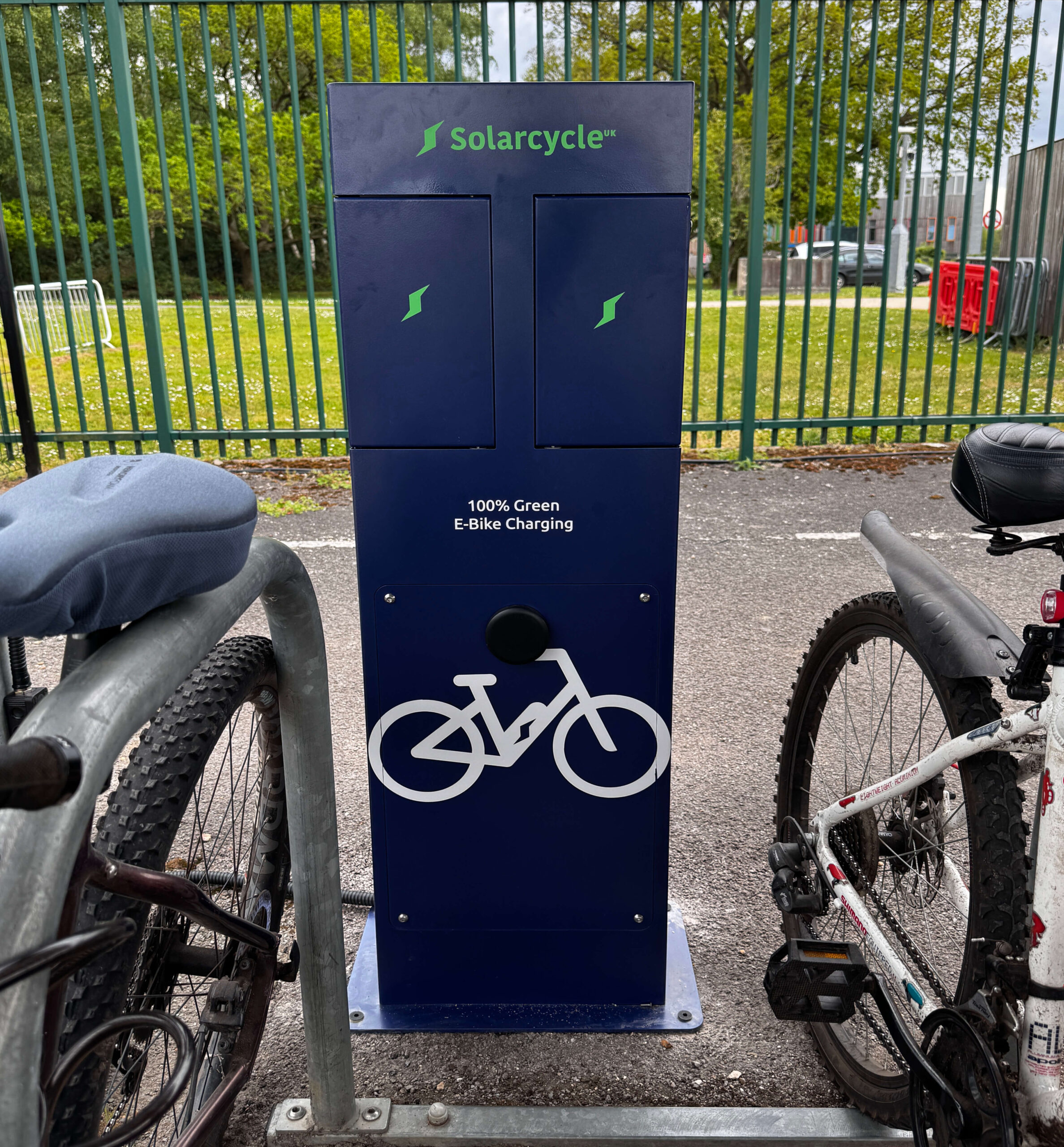
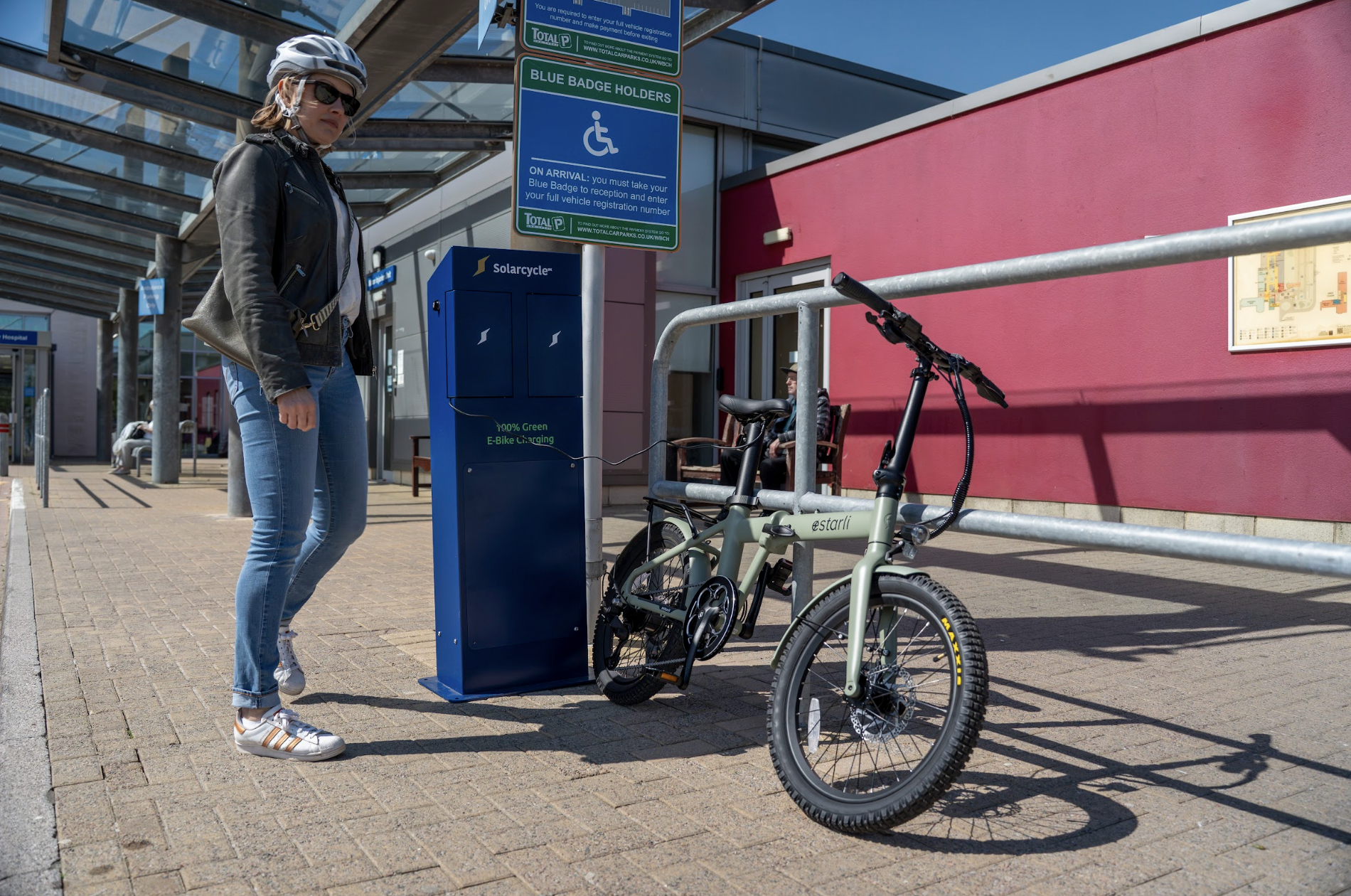

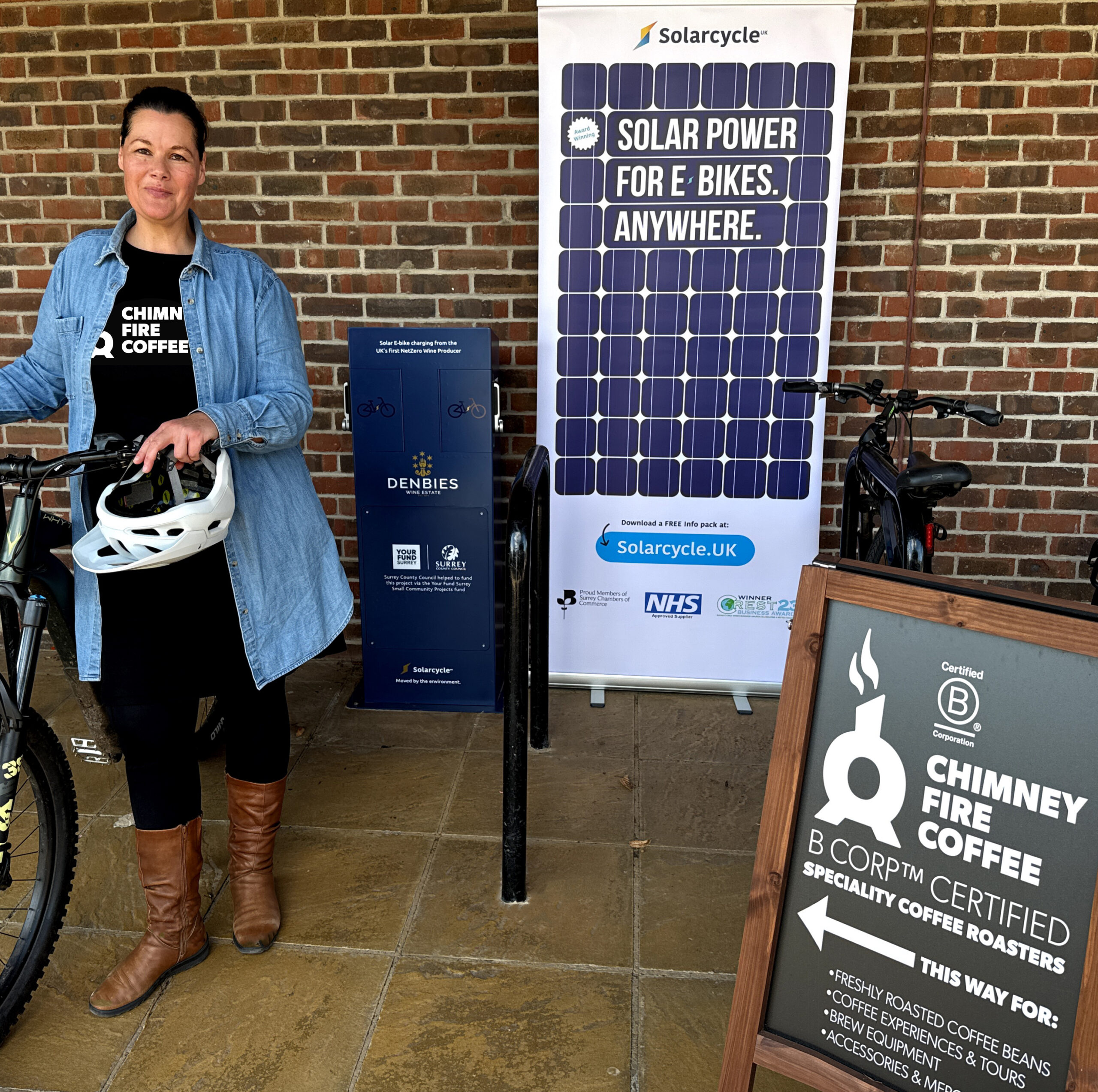
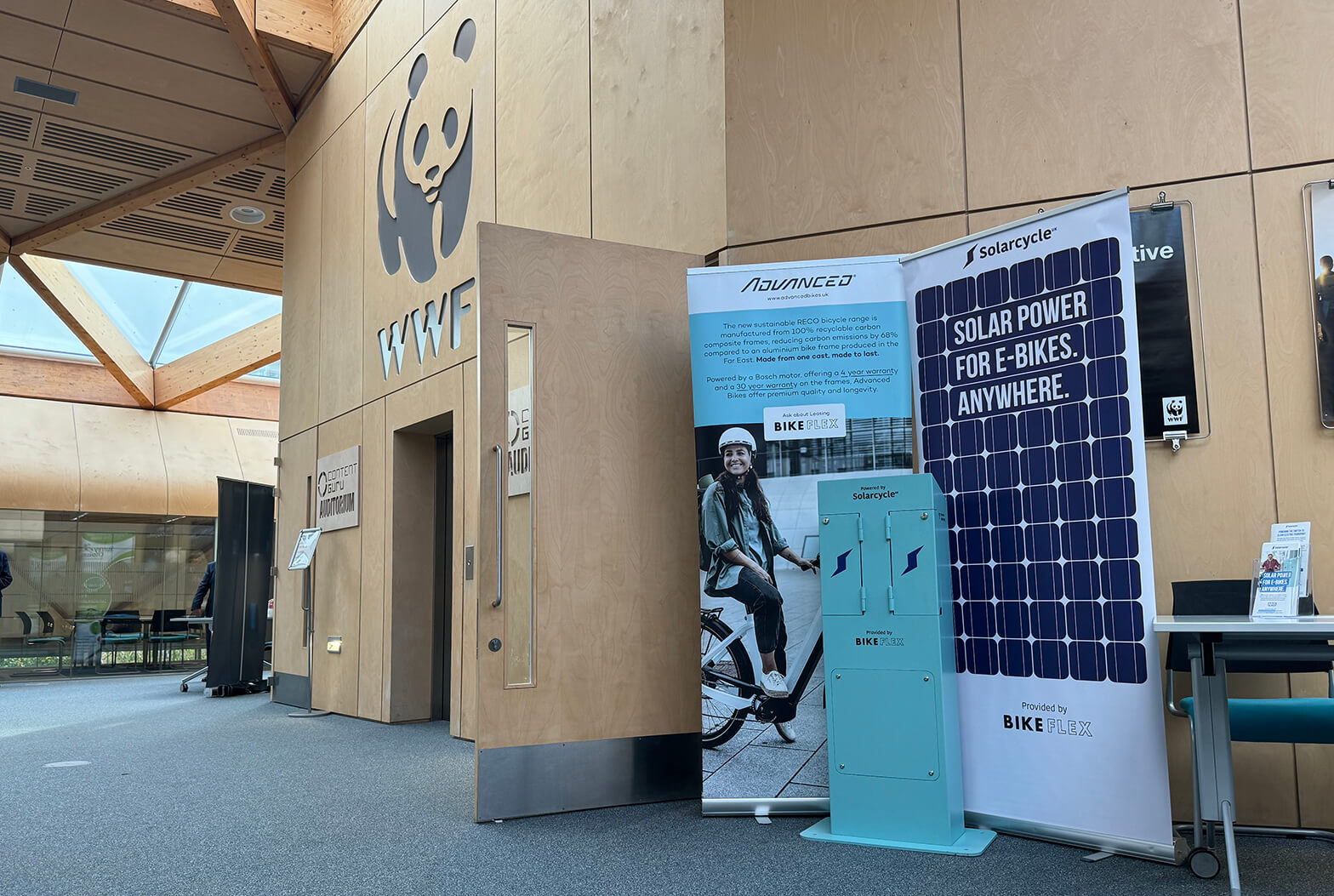
Supporting Campus Mobility in Norfolk
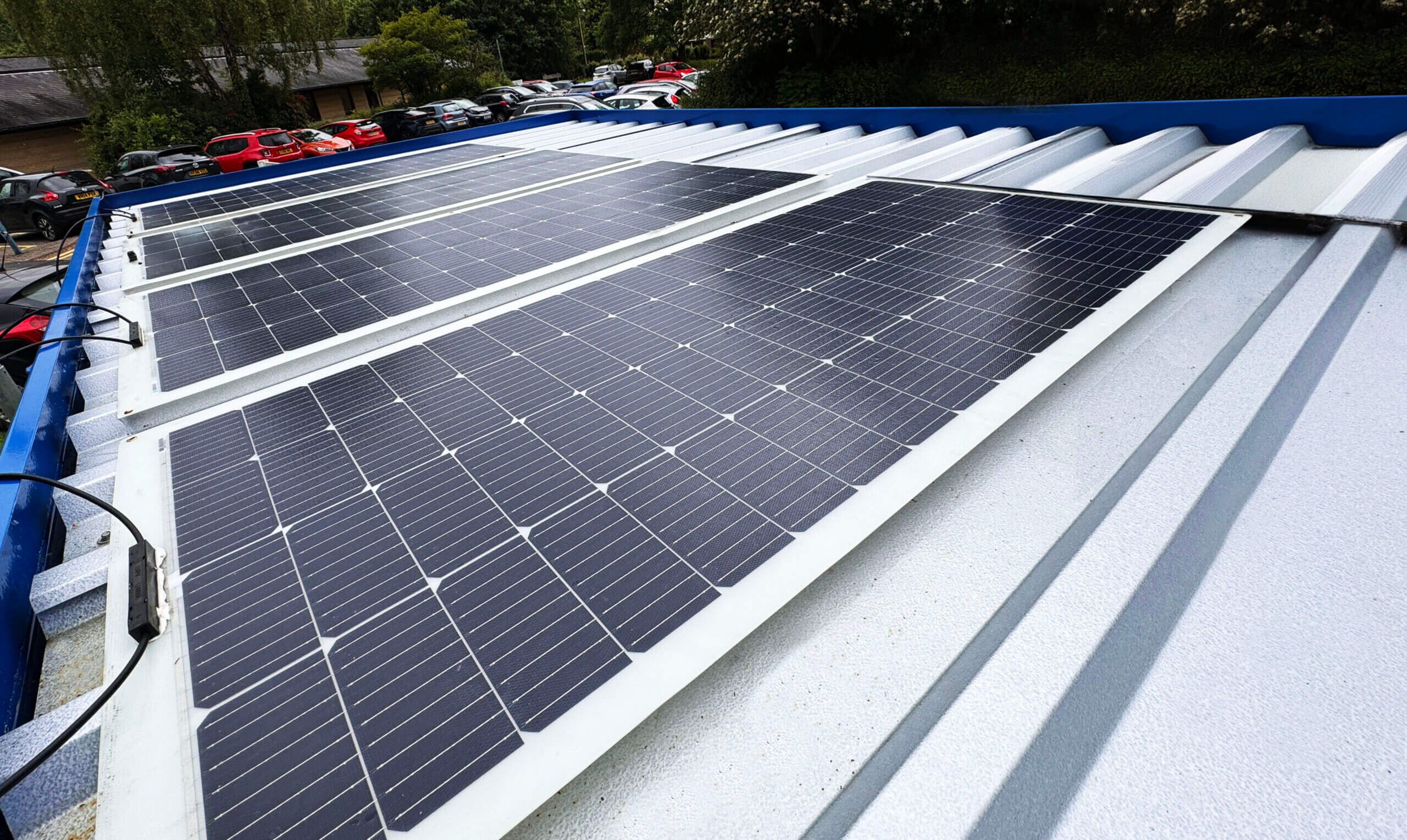
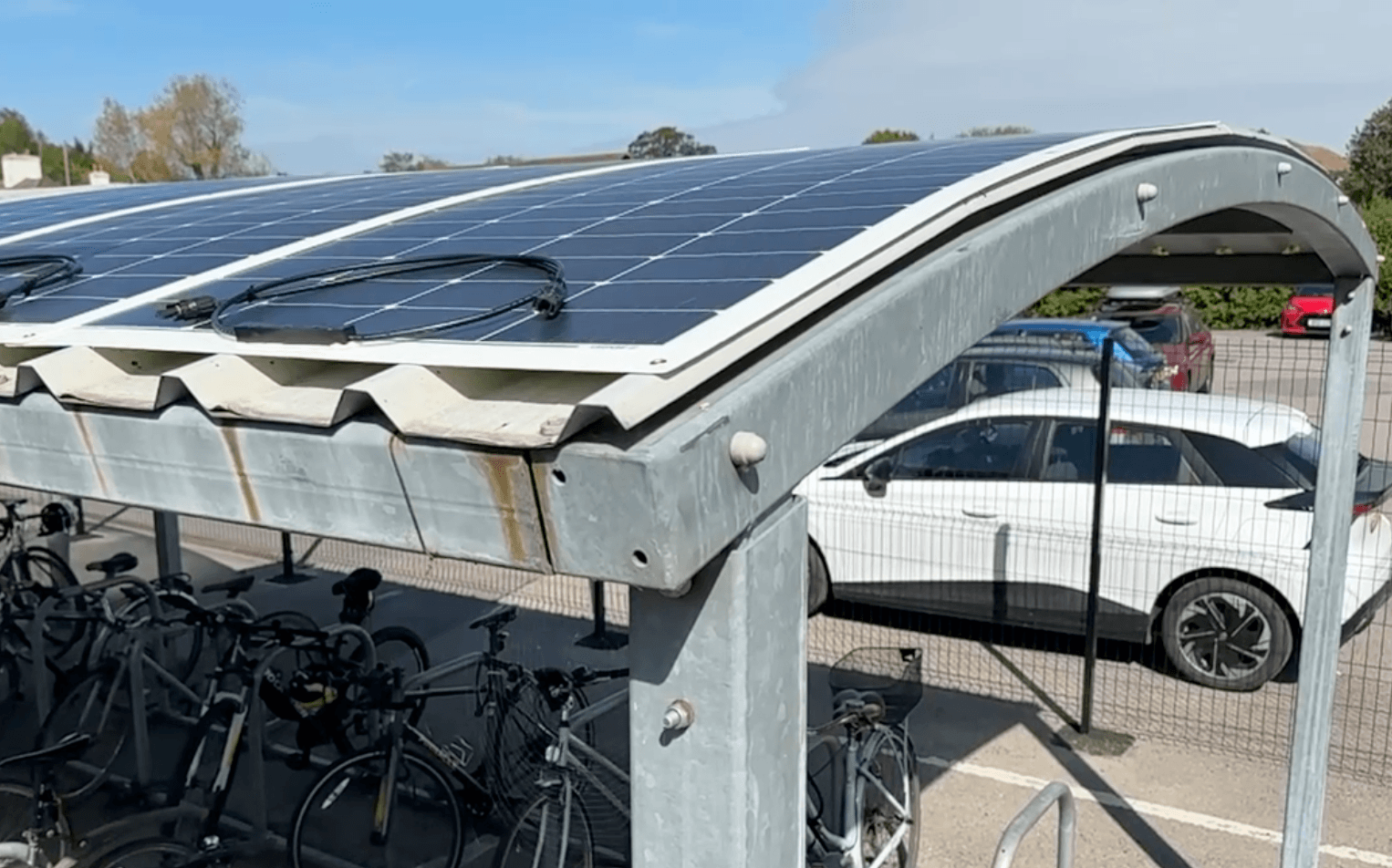
In Norfolk, Solarcycle UK deployed multiple secure, solar-powered e-bike charging stations across a workplace campus, designed to support staff and visitors travelling by e-bike. What the data from this site reveals is instructive: peak charging consistently clusters around commuter arrival windows, and uptake accelerates in the weeks following installation as word spreads through teams. Behaviour, it turns out, is contagious.
Work and educational campuses now recognise sustainable mobility infrastructure as a core part of their environmental commitments, not an optional add-on. Secure charging provides the confidence that turns e-bike curiosity into a daily habit.
These installations reduce parking demand, cut congestion and emissions, and promote healthier travel habits — delivering measurable outcomes for organisations that need to demonstrate progress against sustainability commitments.
Encouraging Sustainable Tourism at Denbies Wine Estate
At Denbies Wine Estate, on the southern edge of the Surrey Hills, Solarcycle installed a public e-bike charging station that is free for visitors to use — bringing clean, accessible mobility infrastructure to one of England’s most distinctive rural landscapes. Usage patterns like this, tell a different story to urban commuter sites: charging spikes at weekends and during school holidays, tracks closely with weather, and shows strong seasonality. This is tourism-driven behaviour, and it is only visible because Solarcycle is present in environments like this.
The goal was not simply to provide charging infrastructure, but to actively encourage cycling to the estate and surrounding countryside — making the e-bike a natural part of the visitor experience rather than an afterthought.
Destinations that make charging easily accessible and free actively change how visitors explore — quietly, cleanly, and across more of the landscape than they would by car.
As eco-tourism continues to grow, infrastructure like this plays an increasingly important role in shaping how visitors travel — and Solarcycle’s data is already building the evidence base to prove it.
Supporting NHS Staff and Smarter Transport in Wales
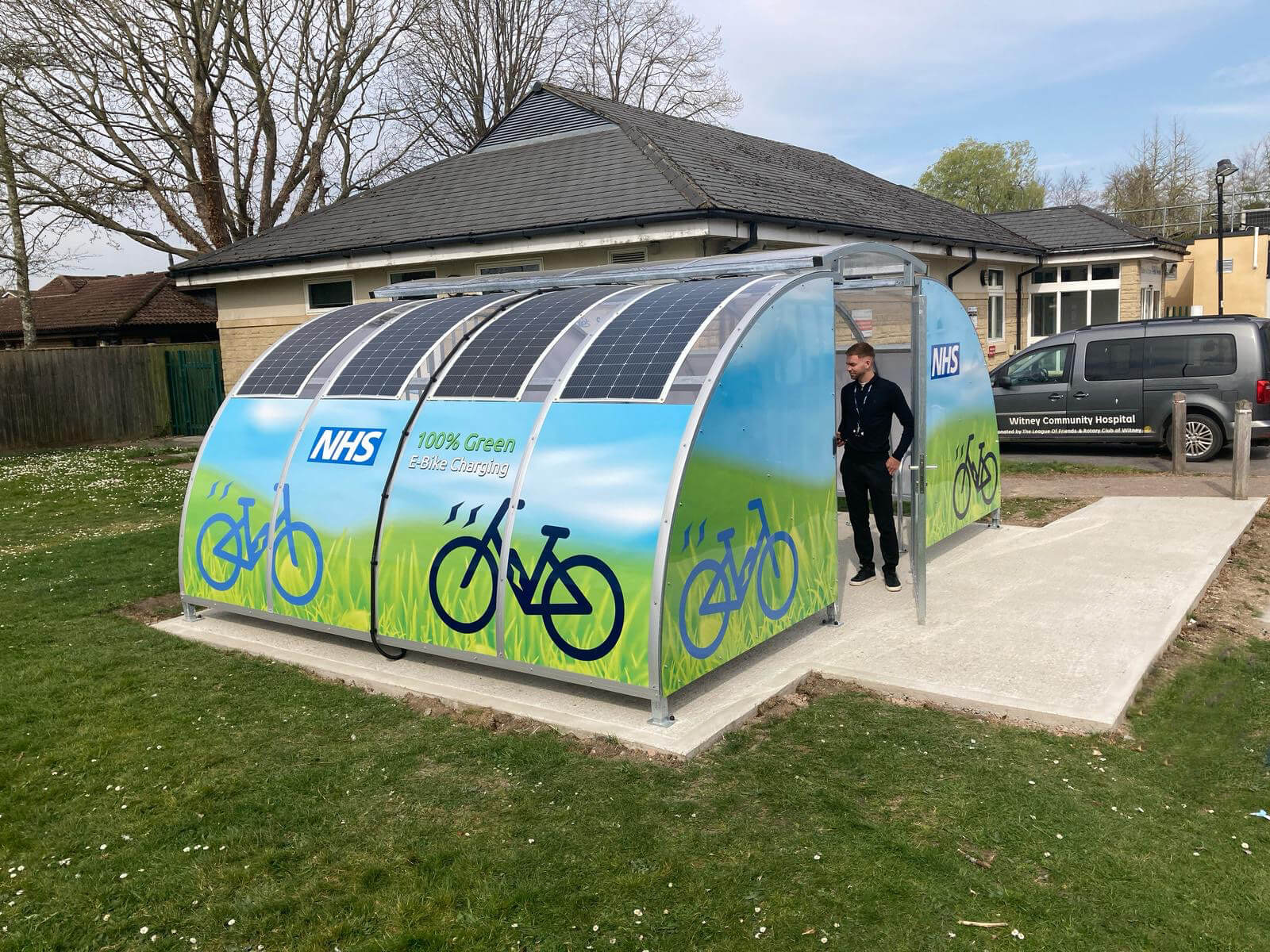
At Ystradgynlais Community Hospital in Wales, Solarcycle deployed a free-to-use e-bike charging station for hospital staff.
NHS sites present a distinct charging profile: usage is distributed across shift patterns rather than conventional commuter peaks, and adoption tends to build steadily as staff see colleagues using the infrastructure. Hospital environments also generate valuable data on how charging behaviour differs when financial pressures and parking availability are primary motivators for switching.
Healthcare facilities face acute pressure around parking availability, cost, and sustainability targets. With around 25 cars competing for each parking space, encouraging staff to commute by e-bike addresses financial budgets, CO2 levels and staff wellbeing simultaneously — and the charging data tells us exactly how that shift happens in practice, so we’re able to predict and provide the right solution based on proof.
Projects like this prove that e-bike charging delivers directly against operational efficiency, staff wellbeing, and sustainability goals — and that the evidence is showing in the data to demonstrate it.
Enabling Eco-Tourism on the Isle of Arran
At the far northern reaches of the British Isles, on the Isle of Arran in Scotland — accessible only by ferry — Solarcycle has installed a free-to-use e-bike charging station, supporting eco-tourism and enabling low-impact exploration across one of the UK’s most striking island landscapes. The data from Arran is unlike anything generated in an urban or suburban setting: charging is almost entirely visitor-driven, heavily seasonal, and concentrated around arrival times no-doubt tied to the ferry timetable. It is a dataset we’re building that exists nowhere else.
Remote destinations face unique transport challenges, particularly where visitors rely heavily on private vehicles. E-bike infrastructure creates new opportunities for low-impact tourism while helping destinations preserve the very environments that make them worth visiting.
For islands and rural regions, sustainable mobility is not just an environmental issue. It is tied directly to long-term tourism resilience and economic sustainability — and the charging data Solarcycle is gathering from places like Arran is helping to quantify that relationship for the first time.
Why Nationwide Coverage Matters
One isolated charging point creates convenience. A national network creates knowledge. That distinction matters. And it is what sets Solarcycle apart.
Because Solarcycle’s network spans urban campuses and remote islands, healthcare facilities and heritage estates, commuter corridors and tourism routes, the data it generates is unlike anything any other operator holds. It captures how, when, and where people across the full spectrum of UK environments choose to travel by e-bike — insight that is already shaping the future of the network and the design of Solarcycle’s products.
By factoring in variables such as topography, weather patterns, seasonality, and workplace type, Solarcycle already advises organisations using live data no competitor holds — ensuring every new installation is right for its environment, and building a suite of physical and digital products from the intelligence gathered.
The Next Stage of Sustainable Mobility
E-bikes address more of the UK’s transport challenges simultaneously than almost any other intervention — emissions, congestion, affordability, health, accessibility. But mass adoption depends on one thing: confidence. People need to know they can charge safely and reliably wherever they go. Since 2022, this is what Solarcycle has been building.
From Arran to Wales, Surrey to Norfolk — and every charging point in between, our network is a data point in a picture no one else sees. We know how the UK charges. We know when, where, and why. And we are using that knowledge to build what comes next.
Planning an E-bike Scheme?
Apply to use Solarcycle’s data to help apply for funding.
More Case Studies
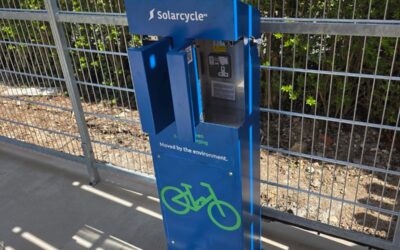
Solar E-Bike Charger Installation – Isle of Arran
Active Travel Aids Planning Consent at UK Research Campus
Case Study: Active Travel Aids Planning Consent at UK Research Campus. Solarcycle Solar E-Bike Charger Enables Compliant, Low-Impact Installation.
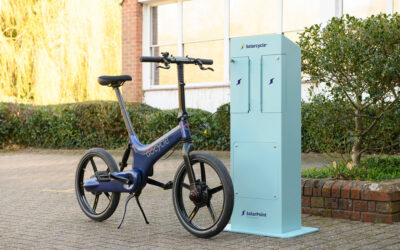
A new E-bike charging network for this UK Campus
[Case study]Charging E-bikes for a campus with 32x e-bikes Safely away from buildings24th Ocober 2025 - Situation: This campus already had a fleet of existing electric scooters with a max range of 4 miles. However, this wasn't sufficient to cover the 10-mile-wide...